

Reference · Industry and manufacturing
Sub-metering of machinery in mechanical engineering
- Client
- Tsubaki Nakashima
- Project goal
- Sub-metering at the level of individual machines
- 79
- Metering points
- 109
- Devices installed
How it is connected
Solution diagram
Simplified diagram based on the project description.
01 · Metering
Machinery meters, a converter in every switchboard
- Electricity
- 79 · metering points
- 109 · devices installed
02 · Transfer
Modbus RTU → TCP, hybrid topology
03 · Data collection
Revolution Pi
- UPS backup power
04 · Network
Dedicated VLAN with internet access and remote management
05 · System
Visualisation
- Real-time consumption
- Alarms for hazardous states
- Machine states: production, idle, standstill
Project summary
The project implemented sub-metering at a mechanical engineering plant specialising in high-precision products, with the aim of gaining a detailed overview of electricity consumption. In the first phase, we focused on the machinery that mattered most in terms of energy draw and technical importance.
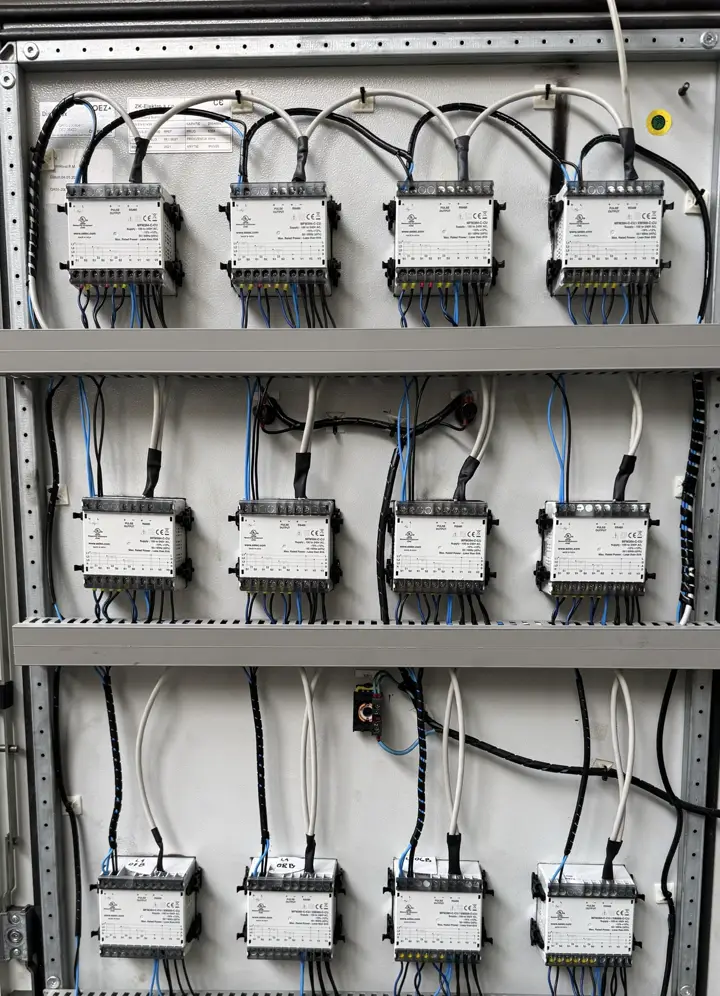
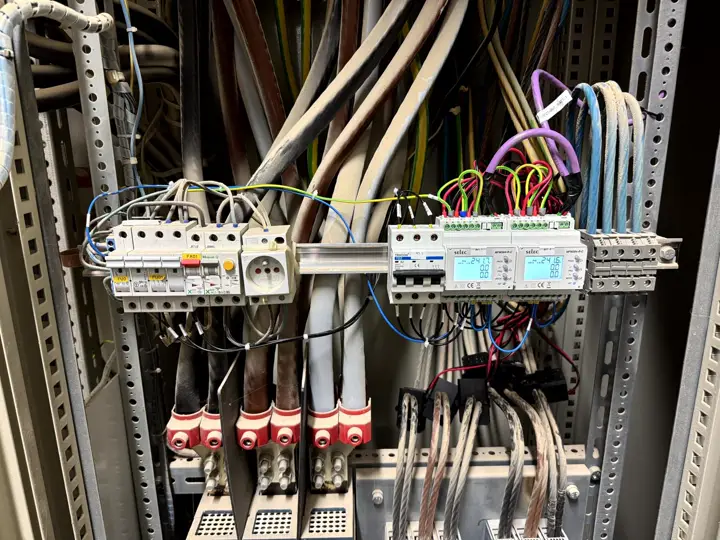
Metering was achieved by networking the metering devices over the Modbus RTU protocol, in a hybrid network topology: each switchboard housed a Modbus RTU to TCP converter, to which the individual meters were connected in a line topology. We then connected all the converters centrally to the relevant switch in a separate subnet (VLAN) to ensure reliable, isolated communication.
Implementation
As the industrial ‘edge’ solution, we used a Revolution Pi, which collects and aggregates the data. It was given its own VLAN with internet access, which makes remote management possible. We equipped the Revolution Pi with a backup power supply (UPS) with a battery to eliminate the risk of metering dropping out during a power cut.
Together with our partner company, which led the project, we developed a visualisation that displayed the measured data in real time, analysed consumption and raised alarms for hazardous states. A system for recognising the state of each machine was also integrated at the client’s site, so it is possible to track whether machines are in full production, idle or at standstill, giving a complete view of how production capacity is used.
Results
We installed 79 metering devices, and the total number of electrical components installed reached 109, ensuring detailed monitoring of all relevant parts of production. The result is a reliable and detailed system that helps reduce energy costs, optimise production processes and support better maintenance management.
Two further phases are now being prepared, which plan to extend metering to further machinery and add other utilities (water and gas) to the system, together with ambient temperature measurement, to give an even more complete overview of operating conditions in the plant.
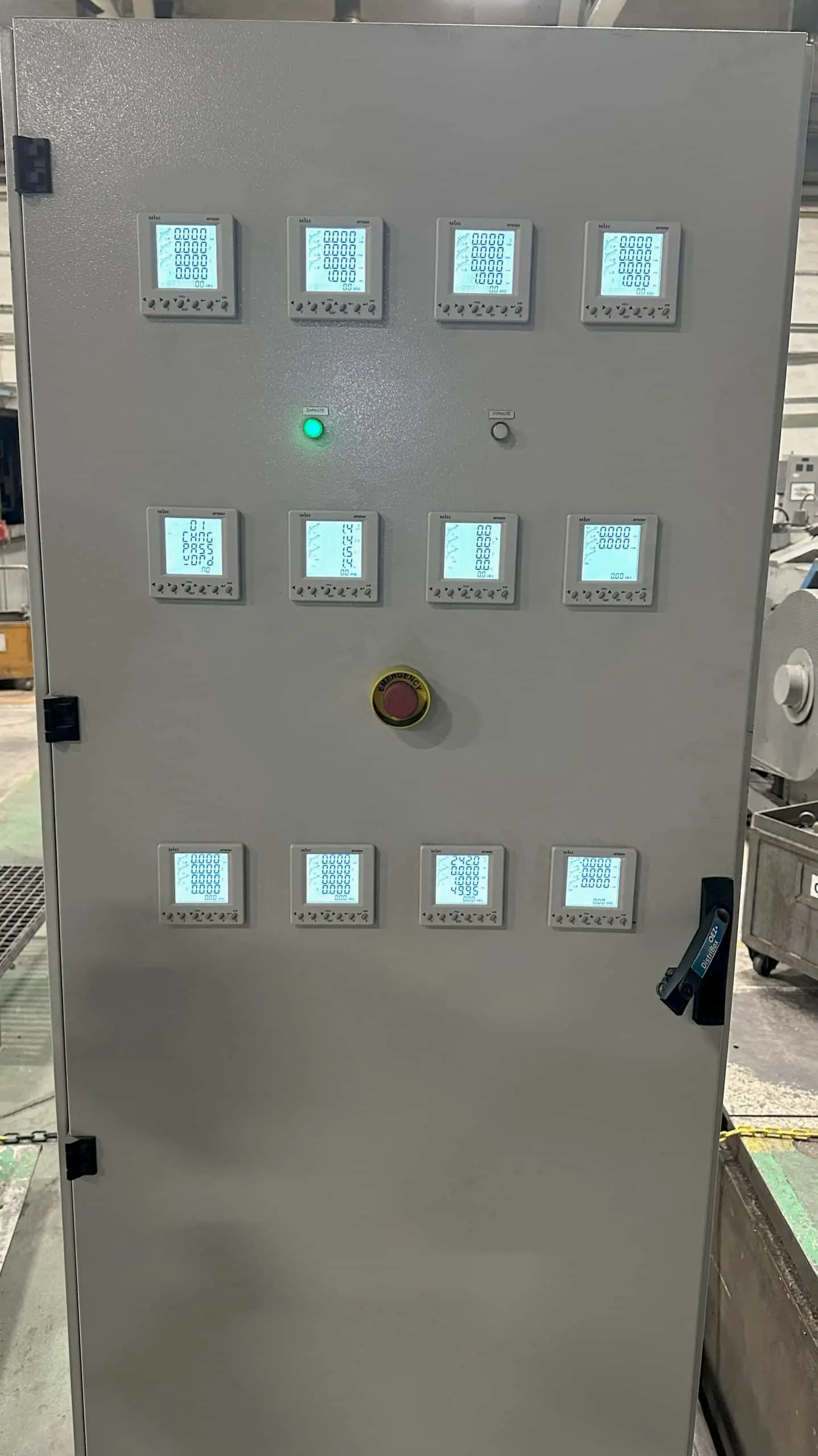
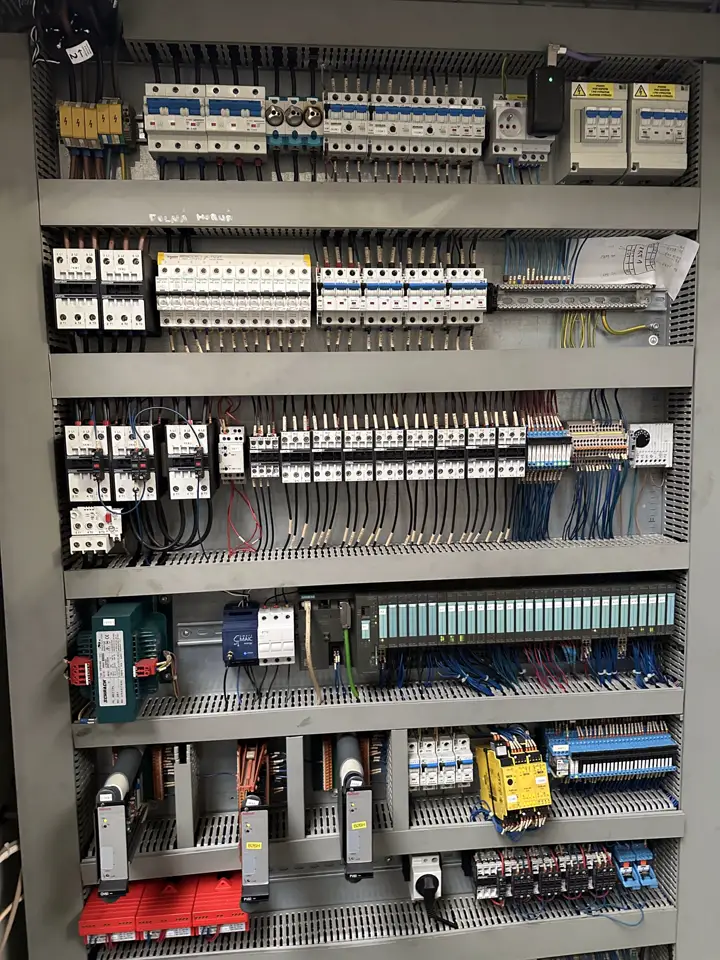
On site
Photos from the project
6 shots straight from the installation.
Industry and manufacturing
More projects in the segment
 Industry and manufacturingSub-metering of machinery in mechanical engineering IITsubaki Nakashima · mechanical engineering54 pts · 84 pcs
 Industry and manufacturingElectricity monitoring in the furniture industryEkoltech · furniture manufacturer, Fiľakovo28 pts · 15 pcs
 Industry and manufacturingEnergy monitoring integrationVegum · rubber industry40 pts · 45 pcs
All projects in Industry and manufacturing
Continue to another segment
Contact
Want a similar result at your site?
We start with a site visit and a no-obligation quote. A pilot project on one building proves the benefit before you decide on full deployment.
Write to us
For clients and partners
- Mgr. Denis HriňCo-founderhrin@
nidextechnology.com+421 905 134 635 - Ing. Nicolas HečkoCo-founderhecko@
nidextechnology.com+421 904 418 299
Please call before visiting